
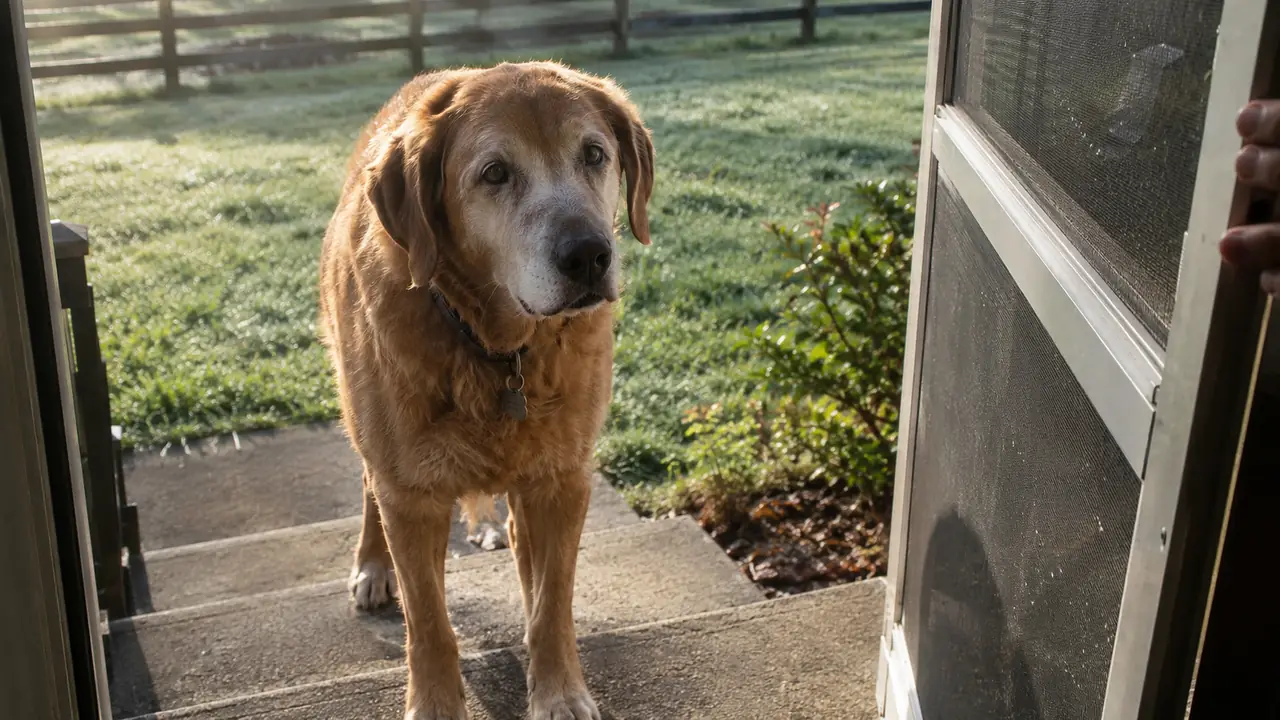
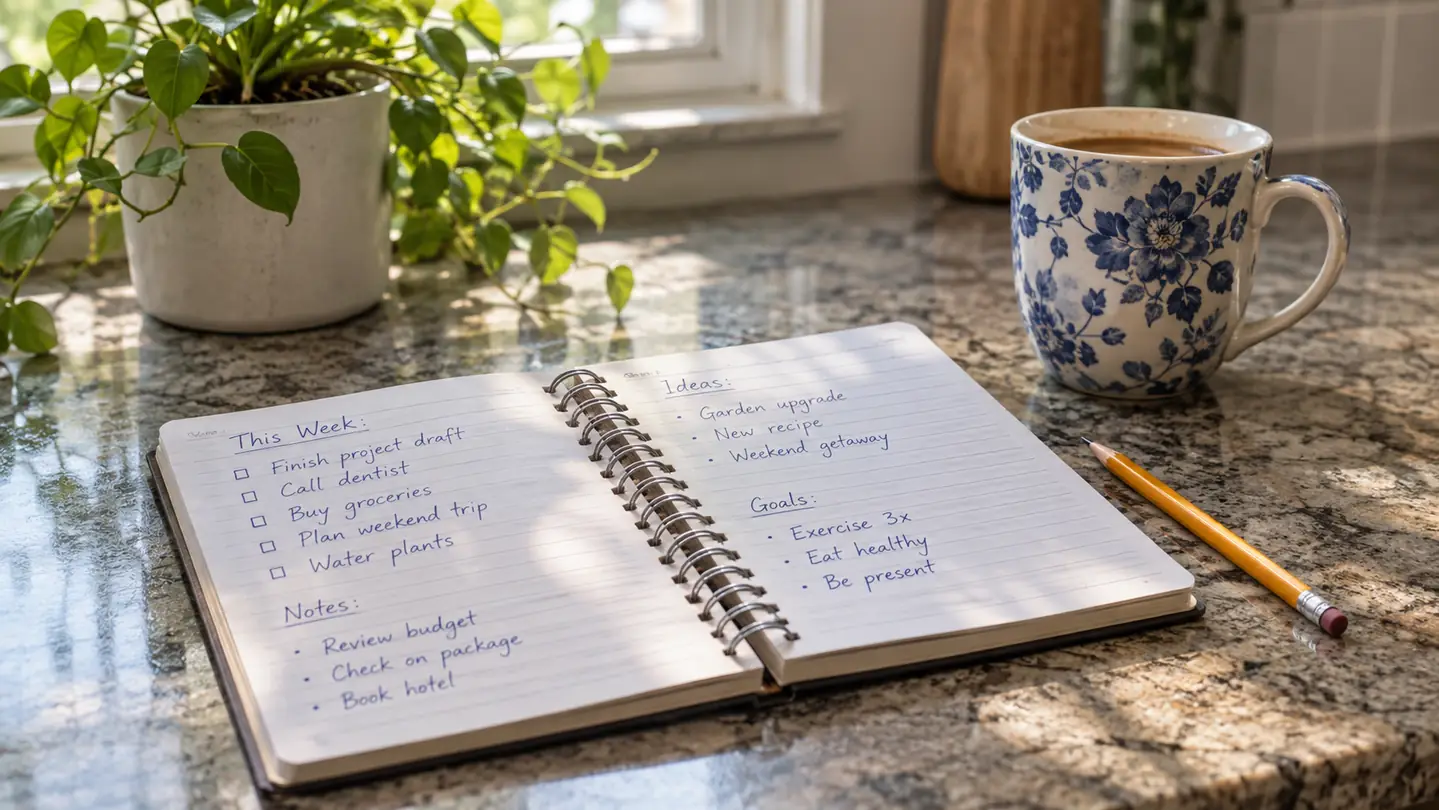
I keep a spiral notebook on the kitchen counter. One line a day, nothing fancy: how Otis got up, how he did on the porch steps, how far we walked. The porch steps are the part that got my attention. Three concrete steps off the back door, and for a stretch there my eleven year old Lab mix would stop at the top and think about it. Front paws on the edge, back end deciding. Some mornings he went down like a dog half his age. Other mornings he took it one step at a time, and I stood there in my robe pretending I was not watching.
I tried the free things first. Waited to see if it was just a bad week. Trimmed his nails. Cut the walk short. None of that hurt him and none of it changed the porch steps. What did change things, slowly, was a green lipped mussel soft chew called Zesty Paws Mussel Mobility Bites, which he started in May 2025, plus a handful of plain habits around it that I think mattered just as much as the chew did. I am not a vet. Dr. Haldane is. She has seen Otis since he was a puppy, she looked at every label before he started anything, and she sends me back to her whenever I get ahead of myself. That is the arrangement, and I would not do it any other way.
The one he gets twice a day at breakfast
Zesty Paws Mussel Mobility Bites are a chicken flavored soft chew built around cold processed New Zealand green lipped mussel. If your dog has started stopping at the top of the steps to think it over, this is where I would start reading labels.
Amazon Check Today's Price on Amazon →The Five Steps, In Order
Step 1: Look at the steps themselves before you buy anything for them
Before I ordered a single chew I stood on the back porch and looked at what Otis was actually dealing with. Three concrete steps, painted years ago, with a screen door at the top that swings out. Nothing wrong with them. Nothing helpful either. What I noticed was that he was not equally careful in both directions. Going down, he would gather himself and take it slow. Coming up, he would get his front feet on the top step and then need a second to bring his back end along. Two different problems wearing the same coat.
So I dealt with the easy parts first. I keep the steps swept and dry, because wet concrete in November is a different animal from dry concrete in June. I check his nails every couple of weeks, since long nails change how a dog's foot lands. And I stopped standing behind him on the way up. He does better when he picks his own moment. None of that is treatment. All of it is easier on him. I put a tape measure against those steps in the spring of 2025 and got about seven inches of rise on each one, which is taller than I would have guessed after looking at them forty times a day for eleven years. That extra half inch is exactly the sort of thing nobody notices until a dog starts hesitating at the top. I also set a rubber mat at the bottom so his front feet land on something besides loose gravel when he comes off the last step, and I swept that mat every morning through the winter.
This is the part people skip. They buy a joint chew and expect it to fix a slippery surface or a dog who is being hurried. Otis had been slipping on our vinyl plank floor, so the hall got rubber backed runners back in 2024 and that helped. A porch step is not all that different. Look first, then shop.
Step 2: Put the label in front of your own vet before the first chew
Dr. Haldane has seen Otis since he was a puppy. In October 2024 she took X-rays and told us what we had already suspected: arthritis in both hips, worse on the right, plus a stiff left elbow. We talked about prescription pain medication and agreed it was something to revisit later. He is not on it. Everything he takes now started with her looking at a label. The visit where I brought her the mussel chews was an ordinary Tuesday appointment in May 2025, and I carried the container in a grocery bag because I did not trust myself to remember the ingredient panel from a website.
That is not a formality. When I brought the green lipped mussel chews to her, what she wanted to know was what else was in them, because a chew is never just one thing. The label on Zesty Paws Mussel Mobility Bites lists chamomile among the ingredients, and she read the whole panel before she said anything. Then she asked how many I planned to give him and told me to try it. She also told me to call her if his stomach went off. It never did, with this one or anything else, but I knew who to call.
Not every vet will say yes to every chew. Yours may want a blood panel first, or a different amount, or may want eyes on your dog before you start at all. That is fine. The point is that somebody with a medical degree has seen the container before your dog does. Dr. Haldane also asked me to write the start date in the notebook so that six weeks would mean something later. I did, and I would have forgotten it otherwise.
Step 3: Start with one chew and let him tell you it is food
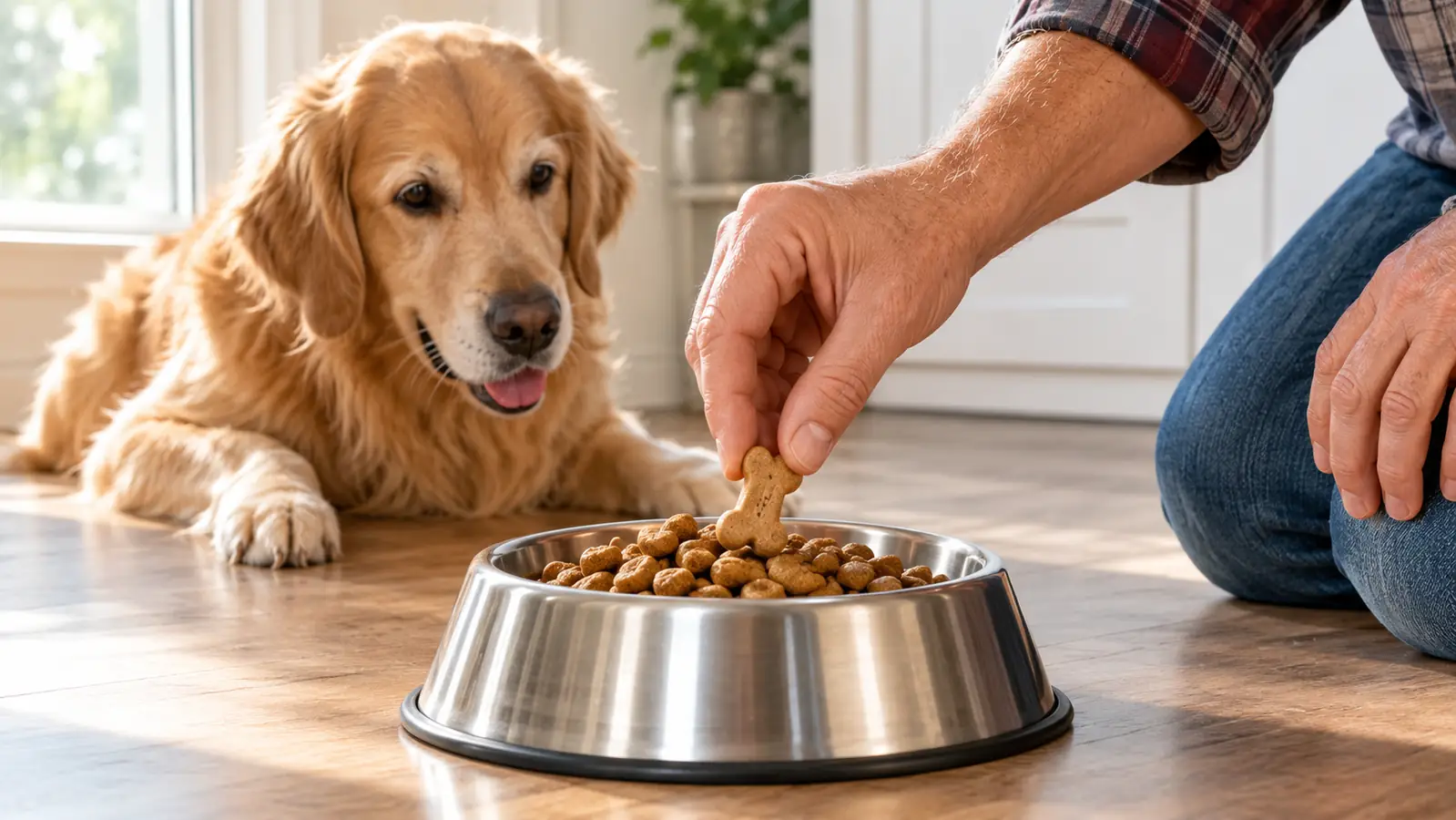
The label says to begin with one chew a day for the first week, then move to the amount for your dog's weight. Otis was 74 pounds at the time, so after that first week he went to two chews a day. Both go on top of his breakfast, which is plain dry kibble at seven in the morning. He is not a fussy dog and he treats them like food, which is exactly what I wanted. A chew that gets spit out on the kitchen floor is money in the trash.
They are chicken flavored soft chews and they live in the pantry with the rest of his things. The container I get is the 7.9 ounce size. Nothing about them needs the refrigerator, which is more than I can say for his fish oil. That one lives in the refrigerator door and makes the whole shelf smell like a pier, and Ron has opinions about it. Otis does not.
One thing I would say to anybody starting any chew: do not open it and put four in the bowl. Start with one, watch the next day, and give it a week. If a dog is going to have a sensitive stomach to something, you want to know which something it was. You cannot know that if you started three things in the same week.
Step 4: Write it down, because you will not remember
This is the piece I push hardest on and it is the least exciting. One line a day in a spiral notebook on the kitchen counter. How he got up in the morning. How he did on the porch steps. How far we walked. It takes fifteen seconds, and it is the only reason I can tell you anything useful about what changed and when. The notebook itself is nothing special, a wirebound one from the drugstore with a coffee ring on the cover and the year written on the front in marker. I date the left margin and put four or five words to the right of it. March 3, down the steps fine, slow coming up. March 4, same. That is the whole system, and it has outlasted every phone app I ever downloaded.
For the mussel chews, the notebook showed a change at about six weeks. Not a dramatic one. He had been dragging on the last stretch of the walk, the block before home, and he stopped doing that. That is the whole entry. I would read a line like that and think, is that a real thing or was it a cool morning? So I kept writing. When the same line shows up for two weeks running, it is a real thing.
Six weeks is the number I would give anything before deciding. Not six days. Not a weekend. People who try a chew for four days and say it did nothing have not tested it, they have sampled it. And people who say it changed everything overnight are selling something.
Step 5: Change one thing at a time, and admit you cannot prove which one worked
Otis is on five things now, and they went in one at a time, months apart. Cosequin in November 2024 on Dr. Haldane's suggestion. Fish oil in February 2025. The Zesty Paws mussel bites in May 2025. A hyaluronic acid liquid that September, which I nearly skipped because he was already on three things. Turmeric this past February, because winter mornings are his worst. Every one of them is still in use and I have never stopped one to test it.
Which means I cannot tell you which one did what. I can tell you the Cosequin came first and the first change in the notebook was his morning get up, by January 2025. I can tell you the mussel bites lined up with him quitting that drag on the walk. I cannot prove the second thing was caused by the third thing. Nobody with more than one supplement in the bowl can. Be suspicious of anyone who says otherwise, including me.
What I can tell you is where he is today. He gets up easier than he did that October. He walks about twenty minutes on a good day. He goes down the porch steps steadily and he is still slow coming up. Cold, wet days are still his worst. He is not cured and he is not young again, and I am not going to sit here and tell you a chew did that.
What Else Helps
The other things are not supplements. His weight is the big one. Dr. Haldane asked us to keep him under 75 pounds and he has held at 74 for two years now. Every extra pound on a dog with two bad hips is a pound he carries up those three steps forty times a week. If you do one thing off this whole page, do that one. It was not complicated, either. We cut his kibble back by about a quarter cup a day and Ron stopped slipping him bits of whatever he happened to be eating, which was a harder conversation at this house than the kibble was. He has held at 74 since.
The walk length matters too. We were down to about twelve minutes in October 2024. We are at about twenty now, and I do not push past what he offers me. Short and every day beats long and every third day, in my book, and it gives you more days to write in the notebook.
The car never came back. Otis does not jump into the Chevy Equinox and he did not start again, and I do not expect him to. Ron lifts his back end in. No chew on the market changes that. If somebody tells you theirs did, ask them for the notebook. And on the cold wet mornings I let him set the pace. That is not giving up. That is reading the dog in front of you instead of the dog you had five years ago.
Six weeks in, the notebook has the same line three days running: no dragging on the last stretch of the walk. That is all it says. I will take it.
Start with one chew, then give it six weeks
Two chews a day at his weight, on top of breakfast, is where Otis landed after the first week. Read the label with your own vet, keep a line a day, and let the notebook tell you whether it is working.
Amazon Check Today's Price on Amazon →