

The first thing I want to get out of the way is that Cosequin did not give me my old dog back. Otis is eleven years old, seventy-four pounds, a black Lab mix with arthritis in both hips, worse on the right, and a stiff left elbow that showed up on the X-rays in October 2024. No chew on a shelf anywhere fixes that. What I can tell you is what my spiral notebook says, one line a day, since the week we started him on it.
I am not a veterinarian and I am not going to pretend to be one. Dr. Haldane has been Otis's vet since he was a puppy, and she read every label before he started anything. But she is not the one who watches him get up off the living room carpet every morning. I am. So this is not a lab report and it is not a commercial. It is a plain account of two years of giving a dog the same soft chew at seven in the morning, what the notebook shows, and the parts a pretty label leaves out.
The Quick Verdict
Cosequin is the one I would start with again if I had it to do over, and it is also the one I would warn you hardest about expecting too much from.
Amazon Check Today's Price →The one my vet pointed at first, two years before this review
One bag, the amount on the label for your dog's weight, and a fair run of eight to ten weeks before you decide anything. That is the whole method, and it is the only test that ever told me the truth.
Amazon Check today's price on Amazon →What Nobody Tells You Before the First Chew
Here is what I wish someone had said to me in the feed store aisle, with a bag in each hand and no help in sight.
The first thing nobody tells you is that joint supplements are slow, and slow is not a word anybody puts on a label. The bag talks about supporting joint health, which is honest as far as it goes, but it does not say you may see nothing at all for two months. I saw nothing for the first six weeks. If I had quit at week four, and I nearly did, I would have told you Cosequin was worthless, and I would have been wrong about my own dog.
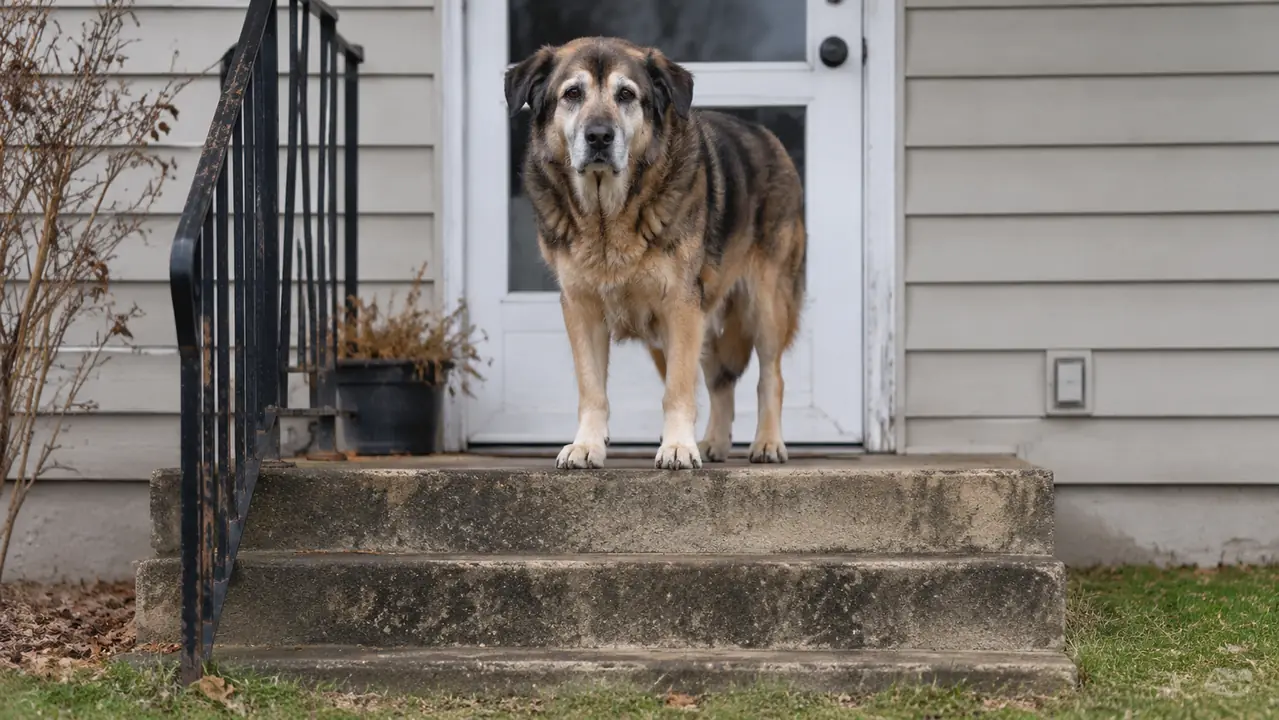
The second thing nobody tells you is that this is not a pain pill. Otis still has arthritis. He still has bad mornings when the weather turns cold and wet, and he still comes up the three concrete steps out back slowly. There is a real difference between a dog who moves a little easier and a dog who is fixed, and that difference matters when you are the one deciding whether to keep buying a bag every month.
The third thing is that Cosequin is a supplement and not a prescription. Nutramax makes it, it comes in a resealable bag of soft chews, and it sits on the same shelf as a hundred other things with happy dogs printed on the front. Dr. Haldane was plain with me about this. She said if we were going to try one thing, try one thing, give it a real run, and write down what we saw. That is where the notebook came from, and it has been on the kitchen counter ever since.
There is also the matter of reading the label instead of the picture. A joint chew is not held to the same standard as a prescription, and not every bag in that aisle tells you what is inside and how much. This one does. Glucosamine, chondroitin, MSM, spelled out. That is worth more than a photograph of a running dog, and I learned to look for it.
How I've Used Cosequin Since November 2024
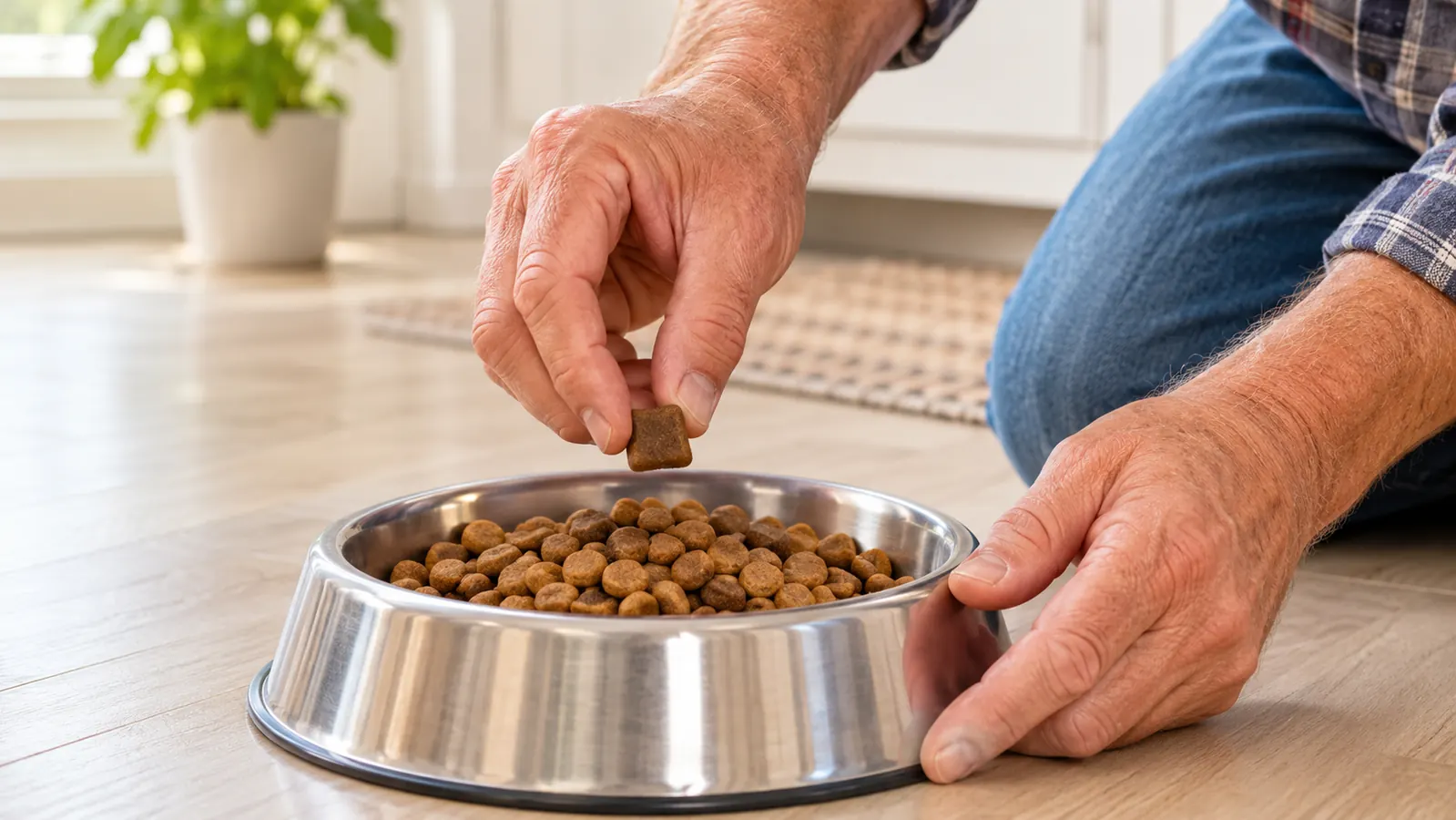
We started in November 2024, on Dr. Haldane's suggestion, at the label's amount for his weight. Otis is seventy-four pounds and she wants him under seventy-five, so that amount has not changed in two years. I set it on top of his breakfast, which is plain dry kibble at seven in the morning. He does not chew it, he inhales it, and then he checks the floor in case something fell. The bag lives in the pantry next to the flour, not in the refrigerator, because the label does not ask for that. The first morning I gave him one I stood over the bowl watching him eat like it was a medical procedure. By the end of that week it was just part of filling the bowl, and that is the honest truth of what two years of this looks like: about thirty seconds of your morning, every morning, in the same order, bowl on the floor and chew on top of the kibble.
A 120 count bag lasts about two months at the label amount for a seventy-four pound dog, so I buy them two at a time and keep the spare on the pantry shelf. Ron thinks I am running a warehouse. I think a dog with arthritis should not have to wait on a delivery, and that is the entire reason.
The way I keep it honest is the notebook. One line a day, next to the coffee maker. How he got up. How he did on the steps. How far we walked. It is not scientific and I would never claim it is. But it is written down before I have a chance to remember things the way I would like them to be, and that turns out to matter when you are two months in and hoping.
Staying with the soft chew was Ron's argument as much as mine. Otis is not a dog you can pill. He finds tablets in kibble, eats around them, and looks at you like you have insulted his intelligence. A soft chew that smells like food goes down before he thinks about it. That is not a small thing. A supplement your dog will not eat is a supplement you are not really giving.
The notebook line from the second week of January 2025 says it plain: 'Up on his own before I called him. First time in months.'
The Weeks Where Nothing Happened
Weeks one through five, nothing. I want to be honest about that, because most of what you read says the change came fast. Mine did not. He got up slow, he did the porch steps the way he always did, one at a time with a pause at the top, and he walked about twelve minutes because that is all he wanted. I wrote 'no change' eleven days in a row at one point. Eleven.
Before I blamed the chew I tried the free fixes, because they cost nothing and I could start that same afternoon. I moved his bowl off the vinyl plank and onto the edge of the living room carpet so he was not scrabbling for footing while he ate. I cut the walk to ten minutes and added a short second one in the afternoon instead. Neither one changed a single line in the notebook, and the bowl still sits half on that carpet to this day. Some of this is just an old dog on a slick floor, and no bag fixes a floor.
One afternoon in early December I sat down on the hall floor beside him and rubbed that right hip for ten minutes because I could not think of what else to do with my hands. He sighed and put his head down on the runner. That is in the notebook too, with the word 'nothing' written after it, because I did not want to fool myself later into remembering it as progress.
Around week six I started looking for reasons to stop. The bag was going down, the chews were not free, and Ron asked me, reasonably, whether we were just buying hope. I called Dr. Haldane. She asked two questions: is he eating, and is his stomach fine. He was, and it was. She said give it the full run and then we would talk. I do not know what I would have done without that phone call, and I suspect a lot of people quit right there.
Otis has never had a bad reaction to Cosequin. No loose stools, no throwing up, no itching, nothing on the skin. I say that as one household's experience and not as a promise. If your dog does have a reaction, that is a call to your vet and a stop, not a wait and see.
What Changed and What Did Not
The change, when it came, was small and specific. Sometime in the second week of January 2025, Otis started getting up off the living room carpet on his own instead of waiting for me to say something encouraging first. That is the whole of it. He was not faster. He was not bouncy. He simply stopped hesitating, and hesitation was the thing that had gotten worse through the fall.
At his recheck that March, Dr. Haldane had him walk the length of the exam room and back twice while she watched, then felt both hips with the flat of her hand. She said he was moving through the right hind better than she had expected to see. Then, before I could get my hopes up, she added that she could not tell me how much of that was the chew and how much was the weather turning. I appreciated that more than I would have appreciated a compliment.
What did not change is the list I need to be honest about. He does not jump into the Chevy Equinox and never started again. Ron lifts his back end in, and that is how we go to the vet. He comes up the back porch steps slowly, though going down is steadier than it used to be. He has not run since the fall of 2024, not once, not even for a squirrel in the yard. Cold, wet mornings are still his worst, and I expect they always will be.
Our walks are the other place the notebook keeps me honest. Thirty-five minutes years ago, down to about twelve by October 2024, and back to about twenty by the summer of 2025. Twenty minutes, steady ever since. I would love to tell you a supplement gave me the thirty-five back. It did not. Twenty minutes, five days a week, with a stop to sniff the mailbox, is where we landed.
There is a rhythm to it that I did not expect. Summer mornings he is up before I am. In January I sometimes put a hand under him to help. Same dog, same chew, different weather. If you judge a supplement only by the worst week of the year, you will throw away a lot of good bags and start over with something worse.
What Is Actually in the Bag
The label lists glucosamine hydrochloride, methylsulfonylmethane, which everyone calls MSM, and sodium chondroitin sulfate. Those three are the reason Dr. Haldane pointed at this bag instead of the one beside it. It is a soft chew, it comes in a 120 count, and the bag measures about 7.5 by 3.38 by 10.25 inches, which matters only if you are trying to find shelf space for it next to the flour. The listing also says each chew carries omega-3s for skin and coat, and I will tell you plainly that I noticed nothing on the coat from this one. His fish oil is a different story.
The one thing no label can tell you is whether it will work on your dog. Cosequin is the brand most vets point at first, and Dr. Haldane is not the only one who says so, but a recommendation is a starting point and not a result. What I would tell you is to buy one bag, keep a note somewhere, and give it a real run before you decide anything. That is the only test that has ever meant a thing to me.
What I Liked
- A soft chew a picky dog will actually eat, so there is no pilling and no wrestling at seven in the morning
- Glucosamine, chondroitin and MSM in one chew, which is what my vet wanted started first
- The amount for a seventy-four pound dog sits on top of a normal breakfast with no measuring and no fuss
- Two years in, no stomach trouble, no itching, no skipped meals
- Stored in the pantry with nothing to refrigerate or pour
Where It Falls Short
- Six weeks of nothing before the first small change showed up in the notebook
- Does nothing for the car, for coming up the porch steps, or for cold wet mornings
- One more thing to buy every month, and a bag goes faster than you expect at the label amount
- Not a pain pill, and if your dog needs that conversation, this will not replace it
The Four Other Things He Takes, and Why I Cannot Prove a Thing
I have to be straight with you about something most reviews of any joint product leave out. Otis is on five things, not one. Cosequin came first, in November 2024. Fish oil came in February 2025, green lipped mussel in May 2025, hyaluronic acid in September 2025, and turmeric this past February. We added them one at a time, months apart, so the notebook had a chance to show something. But they overlap, and I cannot tell you which one did what. Nobody could, and anybody who says otherwise is selling something.
The spacing was deliberate and it was tedious. Each new bag or bottle got at least eight weeks of notebook lines before the next one appeared on the counter, which is why that list stretches across fourteen months and not one. Plenty of people do it the other way, because the aisle is confusing and every label sounds the same, and I understand the temptation. But if you start three things in one week you will know whether the pile helped and you will never know anything past that. Even with the spacing, I am only sure about the first one.
What I can tell you is that Cosequin is the only one I would call first. It went in when he was at his worst, and the first real change in the notebook came during the months when it was the only thing he was taking. Every addition after that showed something smaller and harder to see. That is not proof. It is what the notebook says, and it is the reason I would start there again.
Who This Is For
This is for the person with an older dog who is slower getting up than they were last year, who pauses on the steps, and who has a vet willing to look at the whole picture rather than one symptom. It suits a dog who will eat a soft chew and a household that can commit to eight or ten weeks before deciding. If you can keep a line on a calendar or a note in a notebook, you will know more in two months than any review, including this one, can tell you.
Who Should Skip It
Skip it if your dog is limping badly, holding a leg up, or has gone off his food, because that is a vet visit and not a trip down the supplement aisle. Skip it if you are looking for a pain pill, because this is not one and nobody should tell you it is. And skip it if you will not give it consistently, because a chew every third day is money in the trash. Ask your own vet before you start anything. I say that as a woman with a notebook, not a diploma.
If you are going to try one thing, try the one my vet named first
A single bag, the label amount for your dog's weight, and a fair run of eight to ten weeks with a line written down each morning. That is how I would do it again, and it is how I would tell a friend to do it.
Amazon Check today's price on Amazon →Otis is eleven and he is not going to get younger. But he gets up on his own most mornings now, and he walks twenty minutes, and he still checks the kitchen floor after breakfast in case I dropped something. That is not a cure. It is a better Tuesday than we had two years ago, and I will take it.